









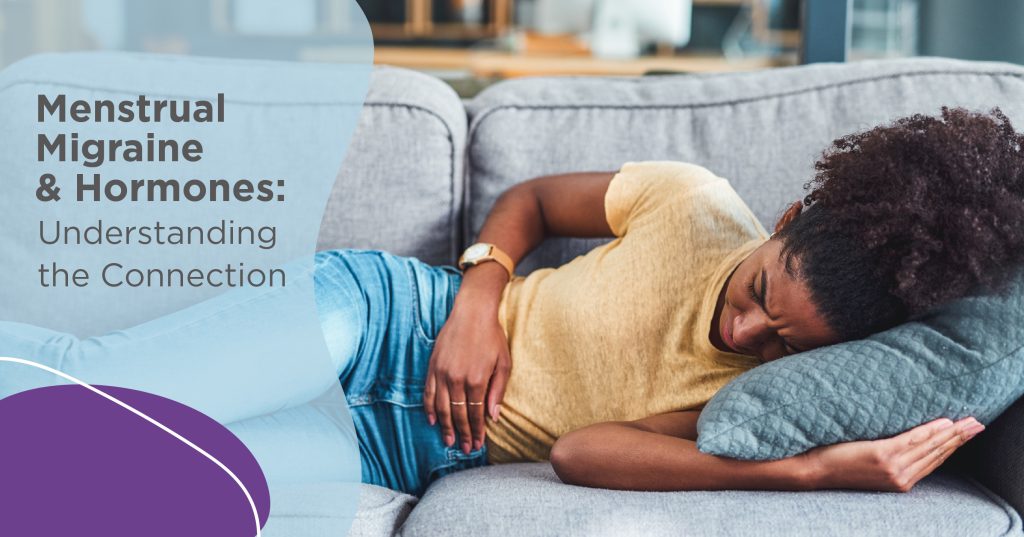

Hormones play an important role in many aspects of health—including migraine.
For many women and people assigned female at birth, migraine attacks are closely linked to hormonal changes that occur throughout the menstrual cycle. In fact, more than half of women living with migraine report that their attacks are associated with menstruation, and these attacks are often more severe, last longer, and can be more difficult to treat than migraine attacks that occur at other times of the month.
Understanding how hormones influence migraine can help you recognize patterns, prepare for attacks, and have informed conversations with your healthcare provider about treatment options.
What Is Menstrual Migraine?
MA menstrual migraine is a migraine attack that occurs around the time of menstruation. According to the International Classification of Headache Disorders (ICHD-3), there are two recognized types:
Pure Menstrual Migraine
Migraine attacks occur only during the menstrual window, typically beginning two days before menstruation through the first three days of bleeding.
Menstrually Related Migraine
Migraine attacks occur during the menstrual period but also happen at other times throughout the month.
Although these two conditions are defined differently, both are believed to be influenced by hormonal fluctuations.
Why Do Hormones Affect Migraine?
Researchers believe that the hormone estrogen plays a significant role in migraine.
Throughout the menstrual cycle, estrogen levels naturally rise and fall. Just before menstruation begins, estrogen levels drop rapidly. For some people, this sudden decline appears to make the brain more vulnerable to a migraine attack.
Rather than estrogen itself causing migraine, it is often the rapid change in hormone levels that influences the brain’s pain-processing pathways.
Migraine is a neurological disease involving complex interactions between the nervous system, blood vessels, neurotransmitters, and hormones. Hormonal fluctuations are one of many factors that may contribute to an attack.
Menstrual Migraine Can Feel Different
Many people notice that migraine attacks associated with menstruation are different from those occurring at other times of the month.
Menstrual migraine may:
- Last longer than other migraine attacks
- Cause more intense pain
- Be accompanied by more vsignificant nausea or vomiting
- Respond less effectively to acute medication
- Return after initial treatment
These attacks can interfere with work, school, family responsibilities, and everyday activities.
Hormonal Changes Throughout Life
Hormones continue to change throughout different stages of life, which means migraine patterns may change as well.
Some people notice changes in migraine during:
- Puberty
- Ovulation
- Pregnancy
- The postpartum period
- Perimenopause
- Menopause
Hormonal medications, including certain forms of birth control or hormone therapy, may also influence migraine patterns. Some individuals experience improvement, while others notice worsening symptoms, and many notice no change.
Because every person responds differently, treatment decisions should always be individualized and discussed with a healthcare provider.
Tracking Your Cycle Can Help
One of the most useful tools for managing menstrual migraine is keeping a migraine diary.
Recording information such as:
- The first day of your menstrual period
- When migraine attacks occur
- Symptoms experienced
- Medication used
- Possible triggers
- Attack duration
can help identify predictable patterns over time.
This information also helps healthcare providers determine whether migraine attacks are hormonally related and recommend the most appropriate treatment approach.
Managing Menstrual Migraine
Treatment for menstrual migraine depends on the frequency and severity of attacks, as well as each person’s medical history.
Your healthcare provider may recommend one or more approaches, including:
Lifestyle strategies
Healthy habits support overall brain health and may help reduce migraine attacks:
- Maintain a consistent sleep schedule.
- Stay hydrated.
- Eat regular, balanced meals.
- Manage stress.
- Exercise regularly, as tolerated.
Acute treatment
Medications taken at the start of a migraine attack may help relieve symptoms.
Short-term preventive treatment
For people whose migraine attacks occur predictably around menstruation, healthcare providers may recommend preventive medication taken for several days before and during the menstrual period.
Long-term preventive treatment
Individuals with frequent migraine attacks throughout the month may benefit from preventive therapies designed to reduce overall attack frequency.
Your healthcare provider can help determine which approach is most appropriate based on your individual migraine pattern.
When Should You Talk to Your Healthcare Provider?
Consider discussing menstrual migraine with your healthcare provider if:
- Migraine attacks occur with most menstrual cycles.
- Your attacks become more frequent or severe.
- Migraine interferes with work, school, or daily activities.
- Your current treatment is no longer effective.
- You are planning a pregnancy.
- You are considering hormonal contraception or hormone therapy.
- You notice significant changes in your migraine pattern during perimenopause or menopause.
Early evaluation can help identify treatment options that fit your needs.
Understanding Hormones Is an Important Part of Migraine Care
Hormonal changes are a normal part of life, but they can influence how the brain responds to migraine.
Recognizing the connection between hormones and migraine empowers you to better understand your symptoms, identify patterns, and work with your healthcare provider to develop a personalized treatment plan.
Migraine is more than a headache—it is a complex neurological disease, and understanding the role hormones play is one more step toward improving care and quality of life.
To learn more about migraine and women’s health, visit the American Migraine Foundation Resource Library for trusted, evidence-based information.
References
- American Migraine Foundation. Menstrual Migraine. Available at: https://americanmigrainefoundation.org/resource-library/menstrual-migraine/
- American Migraine Foundation. Migraine in Women. Available at: https://americanmigrainefoundation.org/resource-library/migraine-in-women/
- International Headache Society. The International Classification of Headache Disorders, 3rd edition (ICHD-3). Cephalalgia. 2018;38(1):1-211.
- MacGregor EA. Migraine. Annals of Internal Medicine. 2017;166(7):ITC49–ITC64.
- American College of Obstetricians and Gynecologists (ACOG). Practice Bulletin: Headaches in Pregnancy and Postpartum.